Impulse
We don't talk about AI – we make it work.
Our teams turn ideas into measurable results.
Start your AI journeyOur capabilities bring vision to life, blending strategy, creativity and technology to turn ideas into real impact.

Your market environment has a decisive impact on your digital challenges. We understand your unique needs and develop solutions that deliver real impact.
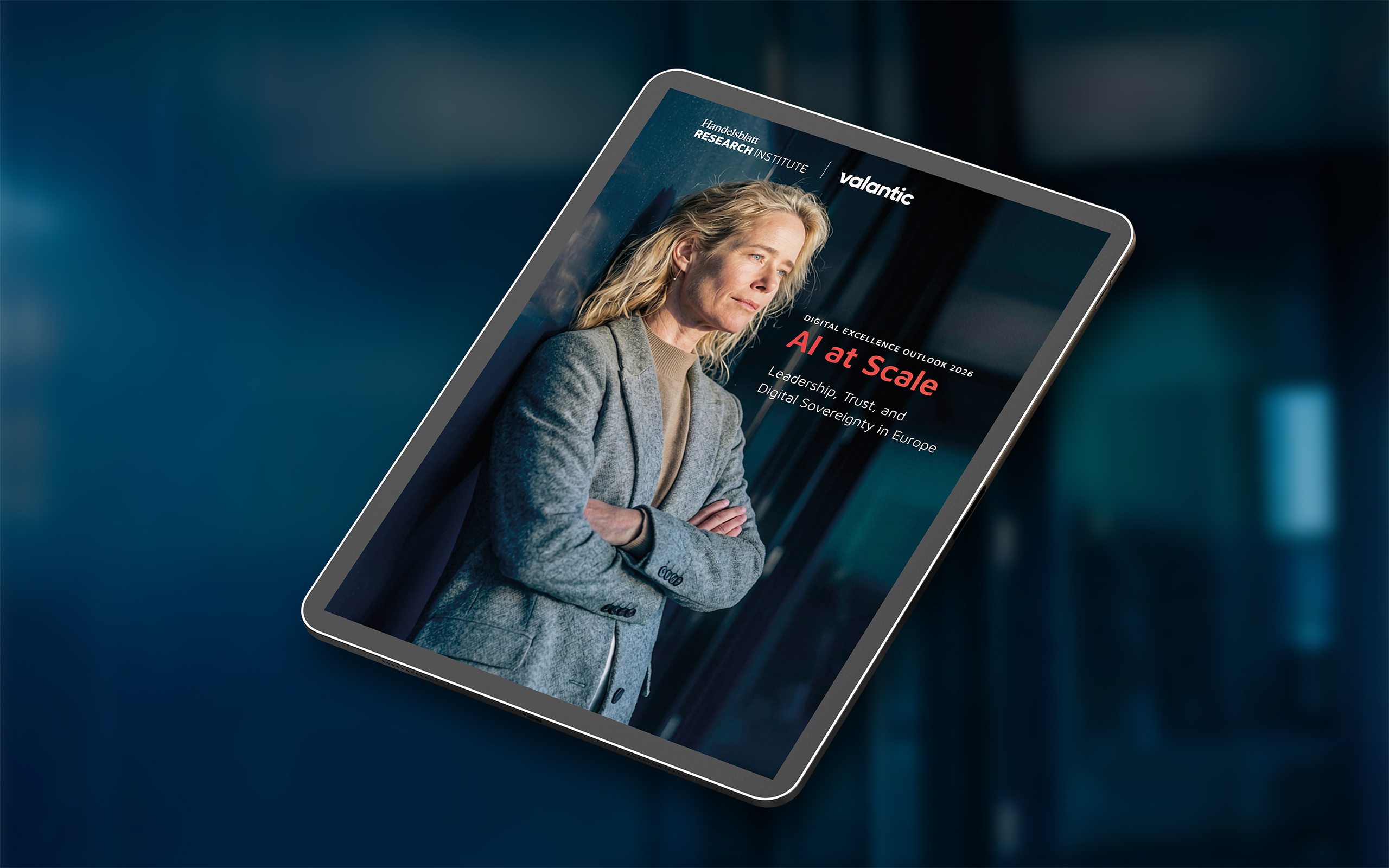
From studies and blogs to webinars, podcasts, and exclusive events – discover ideas, trends, and expert knowledge for your digital future.

With in-depth know-how, clear values, and a vibrant corporate culture, we shape digital transformations that make a real impact.

Are you looking for a professional environment with challenging digital projects for renowned clients? You're in the right place.
Fixed income trading desks today operate in an environment defined by market fragmentation, increasing electronification, and growing operational complexity.
Liquidity is dispersed across venues and protocols. Regulation continues to evolve. Cost pressures remain elevated. Workflows developed incrementally over time are increasingly difficult to scale.
Against this backdrop, valantic FSA has been recognized as the Best Fixed Income Trading Solution in the 8th annual TradingTech Insight Awards Europe, hosted by A-Team Group.
2026 is the fourth consecutive year in which valantic FSA has received this prestigious industry accolade, reflecting consistent , high value service delivery in a market undergoing significant structural transformation.
In terms of the challenges faced by financial market participants, transaction workflow fragmentation is right up there with liquidity and good quality .market and reference data.
Disconnected systems, processes and workflows across pre-trade, execution, data capture and post-trade environments, and manual intervention points, increase operational risk, and impact transparency across the trading lifecycle.
valantic FSA’s approach centers on embedding automation within core trading and transaction workflows. By integrating systems across venues and internal environments, institutions can reduce operational friction, enhance transparency and scale more effectively.
“Fixed income trading desks are under increasing pressure to manage complexity without expanding operational risk,” said Andy Browning, Head of Electronic Trading, valantic FSA. “Automation has to be embedded within core workflows, not layered on top. We focus on helping clients to integrate their trading infrastructure to operate more efficiently, improve oversight, and adapt more readily to a continuously evolving trading environment.”
Industry recognition over many years is very well-received external validation of valantic FSA’s continuing innovation in end to end transaction workflow automation, in trading, payments and broader cross-enterprise flows, enabling financial institutions to reduce transaction processing and reporting complexity, strengthen operational control and establish the infrastructure required to support accelerated time to market, improved customer relationships and competitive differentiation in evolving financial markets.